Jun
13
- by Gareth Harington
- 11 Comments
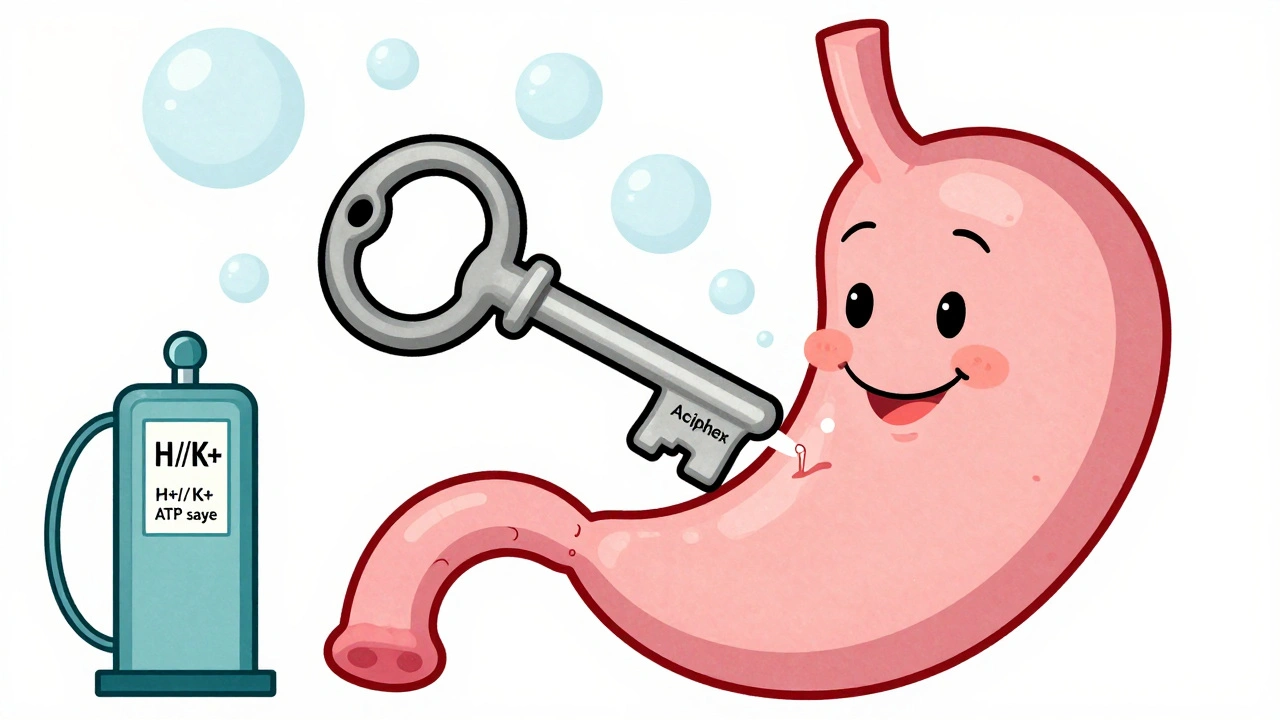
Aciphex is a brand name for rabeprazole, a proton pump inhibitor (PPI) used to treat stomach acid problems like gastroesophageal reflux disease (GERD), ulcers, and Zollinger-Ellison syndrome. Unlike antacids that just numb the burn, Aciphex shuts down acid production at the source - the stomach’s acid pumps. It doesn’t offer quick relief like Tums, but over days, it lets damaged tissue heal by keeping acid levels low. If you’ve been told to take it daily for weeks, that’s why.
How Aciphex Actually Works
Your stomach lining has tiny pumps called H+/K+ ATPase enzymes. These are the same pumps that turn food and water into stomach acid. Aciphex doesn’t block the acid after it’s made - it binds to those pumps and turns them off. This isn’t a temporary fix. The effect lasts until your body makes new pumps, which takes about 24 to 48 hours. That’s why you take it once a day, usually before breakfast.
Most people start feeling better in 2 to 3 days, but full healing of esophagitis (inflammation from acid) can take 4 to 8 weeks. If you stop too soon, the acid comes back, and so do the symptoms. It’s not addictive, but your body can get used to lower acid levels. Suddenly stopping after months of use can cause rebound acid hypersecretion - meaning your stomach overcompensates and makes even more acid than before.
Who Gets Prescribed Aciphex
Doctors usually prescribe Aciphex when lifestyle changes and over-the-counter meds like famotidine or omeprazole haven’t worked. It’s common for people with:
- Chronic heartburn that happens 2 or more times a week
- Esophagitis confirmed by endoscopy
- Peptic ulcers, especially if caused by H. pylori bacteria (used with antibiotics)
- Zollinger-Ellison syndrome - a rare condition where tumors make too much stomach acid
It’s also used short-term to prevent stomach ulcers in people taking long-term NSAIDs like ibuprofen or naproxen. If you’re on daily aspirin for heart health and get stomach pain, your doctor might add Aciphex to protect your lining.
Dosage and How to Take It
Aciphex comes in 10 mg and 20 mg delayed-release tablets. You swallow them whole - don’t crush, chew, or split them. The coating is there to make sure the drug reaches your intestines before dissolving. If you can’t swallow pills, your pharmacist can sometimes mix the contents with applesauce or apple juice, but never with water or hot liquids.
Standard doses:
- GERD with esophagitis: 20 mg once daily for 4 to 8 weeks
- Maintenance for healed esophagitis: 20 mg once daily
- Duodenal ulcers: 20 mg once daily for 4 weeks
- H. pylori treatment (with antibiotics): 20 mg twice daily for 7 to 14 days
Take it at the same time each day, ideally 30 to 60 minutes before a meal. Food doesn’t interfere with absorption, but taking it before eating ensures the drug is already in your system when your stomach starts pumping acid.
Side Effects and Risks
Most people tolerate Aciphex well. The most common side effects are mild:
- Headache
- Diarrhea
- Nausea
- Stomach pain
- Gas
Long-term use (over a year) carries some risks you should know about:
- Low magnesium levels - Can cause muscle cramps, irregular heartbeat, or seizures. Your doctor may check your magnesium if you’re on it for more than 3 months.
- Increased risk of bone fractures - Especially in older adults or those on high doses for longer than a year. Calcium and vitamin D help reduce this.
- Lower vitamin B12 absorption - Acid helps break down B12 from food. Long-term PPI use can lead to deficiency, especially in vegetarians or older people.
- Higher risk of C. diff infection - A type of severe diarrhea caused by gut bacteria overgrowth. Rare, but more likely if you’re on PPIs for months.
Aciphex isn’t safe for everyone. Avoid it if you’re allergic to rabeprazole or other PPIs like omeprazole or pantoprazole. Talk to your doctor if you have liver disease - your dose may need to be lowered.

Aciphex vs Other PPIs
There are five main PPIs on the market: omeprazole, esomeprazole, lansoprazole, pantoprazole, and rabeprazole (Aciphex). They all work the same way, but some differences matter:
| Medication | Brand Name | Onset of Action | Typical Daily Dose | Drug Interactions |
|---|---|---|---|---|
| Rabeprazole | Aciphex | Fastest (1 hour) | 10-20 mg | Low - fewer interactions |
| Omeprazole | Prilosec | 2-3 hours | 20-40 mg | High - affects blood thinners and antidepressants |
| Esomeprazole | Nexium | 2-3 hours | 20-40 mg | Medium |
| Lansoprazole | Prevacid | 1-2 hours | 15-30 mg | Medium |
| Pantoprazole | Protonix | 2-3 hours | 40 mg | Low |
Aciphex is one of the fastest-acting PPIs. It also has fewer interactions with other drugs, which makes it a good choice if you’re on multiple medications. For example, it doesn’t interfere as much with clopidogrel (a blood thinner) like omeprazole does. That’s why some cardiologists prefer it for patients with heart conditions.
What to Avoid While Taking Aciphex
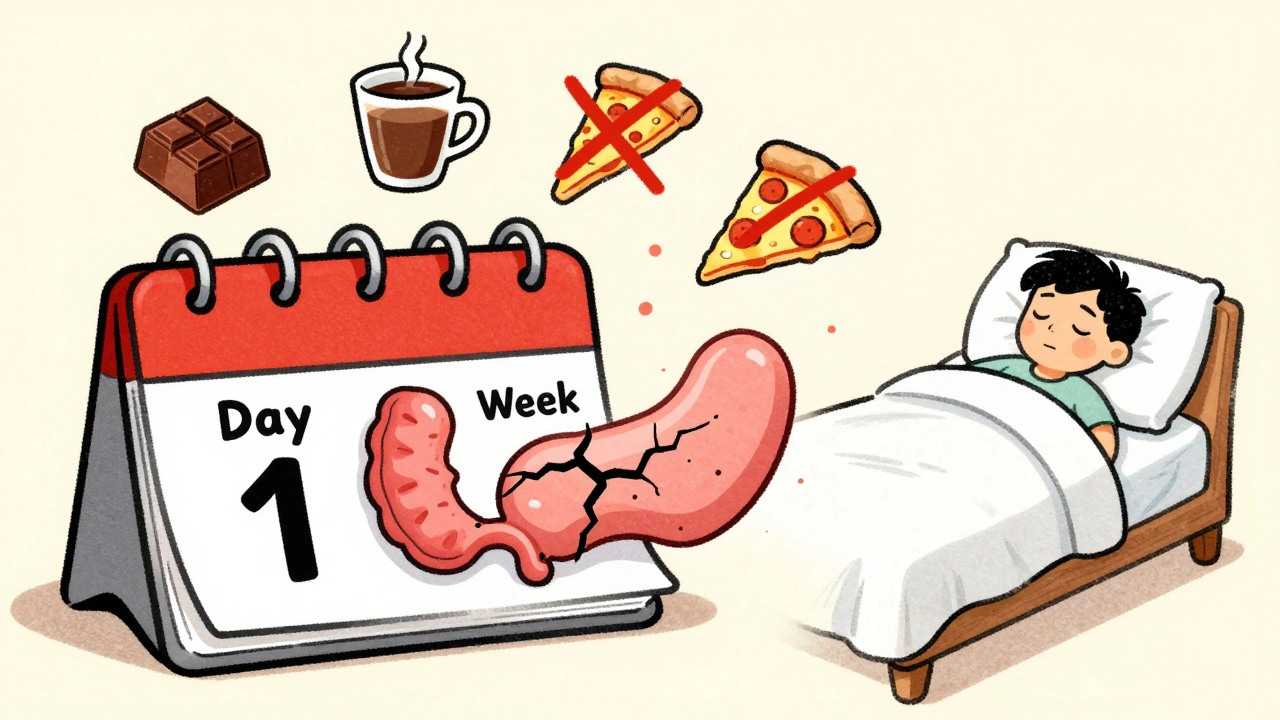
Even though Aciphex reduces acid, it won’t fix bad habits. You still need to avoid:
- Large meals, especially late at night
- Fatty or fried foods
- Chocolate, caffeine, mint, citrus, and tomatoes
- Alcohol and smoking - both relax the lower esophageal sphincter and increase acid
- Lying down within 3 hours after eating
Wearing tight clothes around your waist can also push stomach contents upward. Elevating the head of your bed by 6 to 8 inches helps gravity keep acid down while you sleep.
When to Call Your Doctor
Most side effects fade after a few days. But if you notice any of these, contact your healthcare provider right away:
- Severe diarrhea with fever or blood
- Unexplained muscle spasms, twitching, or irregular heartbeat
- Signs of low magnesium - dizziness, confusion, seizures
- Severe stomach pain, vomiting with blood, or black, tarry stools
- Swelling of face, lips, or throat - possible allergic reaction
If your symptoms don’t improve after 4 weeks, or if they come back after stopping, you may need further testing. Sometimes heartburn is caused by something else - like a hiatal hernia, gallbladder issues, or even esophageal cancer.
Can You Get Aciphex Without a Prescription?
No. Aciphex is only available by prescription in Australia and most countries. You can’t buy it over the counter like omeprazole or famotidine. That’s because long-term use needs monitoring. Pharmacists won’t fill a prescription without a valid doctor’s note.
Some people try to order it online from overseas pharmacies. That’s risky. You might get fake pills, wrong doses, or expired medication. In Australia, the Therapeutic Goods Administration (TGA) regulates all medications. Only buy from licensed Australian pharmacies.
Alternatives to Aciphex
If Aciphex doesn’t work or causes side effects, other options exist:
- Other PPIs - Omeprazole, pantoprazole, or esomeprazole. Switching brands sometimes helps.
- H2 blockers - Ranitidine (no longer available in many places), famotidine (Pepcid). These are weaker but faster. Good for occasional heartburn.
- Antacids - Calcium carbonate (Tums) or magnesium hydroxide (Milk of Magnesia). Fast relief, but short-lived. Not for daily use.
- Lifestyle changes - Weight loss, quitting smoking, avoiding trigger foods, eating smaller meals. These are the foundation of any acid reflux plan.
- Surgery - Nissen fundoplication. For people with severe GERD who don’t respond to meds.
Many people find that combining medication with diet and posture changes gives the best results. One study from the University of Sydney showed that patients who used PPIs plus lifestyle changes had 60% fewer symptoms after 6 months than those who only took pills.
How Long Should You Stay on Aciphex?
There’s no one-size-fits-all answer. For most people, it’s a short-term fix - 4 to 8 weeks to heal damage. For others, especially those with chronic GERD or Barrett’s esophagus, long-term use may be necessary.
But the goal should always be to use the lowest dose for the shortest time. Your doctor may try to wean you off after 3 to 6 months. If symptoms return, they’ll reassess. Never stop cold turkey. Tapering slowly helps avoid rebound acid.
Regular check-ins matter. If you’ve been on Aciphex for over a year, ask about checking your B12, magnesium, and bone density. It’s not about fear - it’s about smart, informed care.
Is Aciphex the same as omeprazole?
No. Aciphex contains rabeprazole, while omeprazole is a different drug. Both are proton pump inhibitors and work similarly, but rabeprazole starts working faster and has fewer interactions with other medications. Some people switch from omeprazole to Aciphex if they experience side effects or if their symptoms aren’t fully controlled.
Can Aciphex cause weight gain?
Aciphex itself doesn’t directly cause weight gain. But some people feel better after reducing acid symptoms and start eating more - especially foods they avoided before, like fatty or spicy meals. This can lead to weight gain over time. It’s not the drug, it’s the change in eating habits.
Does Aciphex help with bloating?
Aciphex can help with bloating if it’s caused by excess stomach acid irritating the digestive tract. But bloating can also come from gas, slow digestion, or food intolerances - issues Aciphex doesn’t fix. If bloating continues after 2 weeks on Aciphex, talk to your doctor about other causes.
Can I drink alcohol while taking Aciphex?
You can drink alcohol in moderation, but it’s not recommended. Alcohol increases stomach acid production and relaxes the valve between your stomach and esophagus, which can make reflux worse. Even if Aciphex is reducing acid, alcohol can still trigger symptoms.
How long does it take for Aciphex to start working?
You might feel some relief within the first 24 hours, but full effect takes 2 to 3 days. Healing of esophageal damage takes 4 to 8 weeks. Don’t stop taking it just because you feel better - the damage is still healing underneath.
Is Aciphex safe during pregnancy?
Aciphex is classified as Pregnancy Category B, meaning animal studies haven’t shown harm, but human data is limited. If you’re pregnant and have severe GERD, your doctor may still prescribe it if the benefits outweigh the risks. Omeprazole has more safety data in pregnancy and is often preferred.
Can Aciphex cause hair loss?
Hair loss is not a known side effect of Aciphex. If you’re experiencing hair thinning while taking it, it’s more likely due to stress, nutritional deficiencies (like iron or B12), or hormonal changes. Long-term PPI use can affect nutrient absorption, so check your levels with your doctor.
Can I take Aciphex with vitamins or supplements?
You can take most vitamins with Aciphex, but timing matters. Take B12, iron, calcium, and magnesium supplements with food - not at the same time as Aciphex. Acid helps absorb these nutrients, and since Aciphex lowers acid, taking them together may reduce their effectiveness. Space them out by at least 2 hours.

Gareth Harington
I am a pharmaceuticals expert who enjoys delving into the intricacies of medication and supplements. My work often involves researching new drug developments and how they impact treatment strategies for various diseases. I find great satisfaction in educating others on these topics, whether through written articles or engaging discussions. Writing allows me to share insights into healthcare advancements and their real-world applications. Passionate about fostering informed communities, I continuously seek to explore emerging trends in the pharmaceutical world.




11 Comments
Libby Rees
Aciphex works great for me, but I always pair it with elevating my bed and avoiding late-night snacks. Simple stuff, but it makes a huge difference.
Carolyn Ford
Let’s be real-PPIs are overprescribed. You don’t need a drug to fix your diet. I’ve seen people on Aciphex for 10 years while eating pizza at midnight. The drug isn’t the problem-the laziness is.
Heidi Thomas
Aciphex doesn’t fix anything. It just masks symptoms while your gut slowly dies from nutrient deficiencies. B12, magnesium, calcium-all leached away. You think you’re healing, but you’re just delaying the inevitable.
Rudy Van den Boogaert
I switched from omeprazole to Aciphex after my cardiologist flagged the drug interactions. No more weird blood thinning issues. Honestly, it’s been a game-changer. And yeah, I still avoid spicy food-but now I can enjoy a glass of wine without regret.
Dematteo Lasonya
I was on Aciphex for six months after my endoscopy showed esophagitis. I tapered off slowly with my doctor’s help. No rebound. I still avoid caffeine after 6pm and sleep on my left side. Small changes, big results.
Gillian Watson
Used to take it daily. Now I only use it when I’ve been eating out too much. My body adjusted. I don’t need it anymore. Just listen to your gut-not the ads.
Jordan Wall
Aciphex? Pfft. That’s just a pharma placebo wrapped in a fancy label. Real medicine is fasting, cold exposure, and ancestral diets. You’re not healing-you’re chemically sedating your digestive system. 🤡
Gareth Storer
So you’re telling me I can’t have my 11pm whiskey and cheese plate anymore? And I have to *sleep upright*? What is this, a monastery?
Pavan Kankala
They don’t want you to know this, but PPIs are part of the Big Pharma plan to keep you dependent. Your stomach acid isn’t the enemy-it’s your immune system’s first line of defense. They profit from your fear of burping.
michael booth
I appreciate the detailed breakdown. I’ve been on Aciphex for 9 months after my ulcer diagnosis. The key was combining it with dietary changes-no more late dinners, no spicy food, and I started walking after meals. It’s not just the pill. It’s the lifestyle. And yes, I got my B12 checked-low, so now I take a sublingual supplement. Small steps, big impact.
Alex Piddington
Thanks for sharing this. I’m a nurse and see patients struggle with PPIs all the time. Many think they need to be on them forever. But with proper tapering and lifestyle support, most can come off safely. Just don’t quit cold turkey. And yes-sleeping on your left side really helps. 😊
Write a comment