Jun
17
- by Gareth Harington
- 10 Comments
Antabuse isn’t a magic cure for alcohol addiction-but for some people, it’s the thing that finally makes sobriety possible. If you’ve tried quitting drinking on your own and kept falling back, or if you’ve lost jobs, relationships, or health because of alcohol, Antabuse might be the tool you’ve been missing. It doesn’t reduce cravings. It doesn’t make you feel calmer. What it does is make drinking dangerous-so dangerous that most people choose not to.
What Antabuse Actually Does
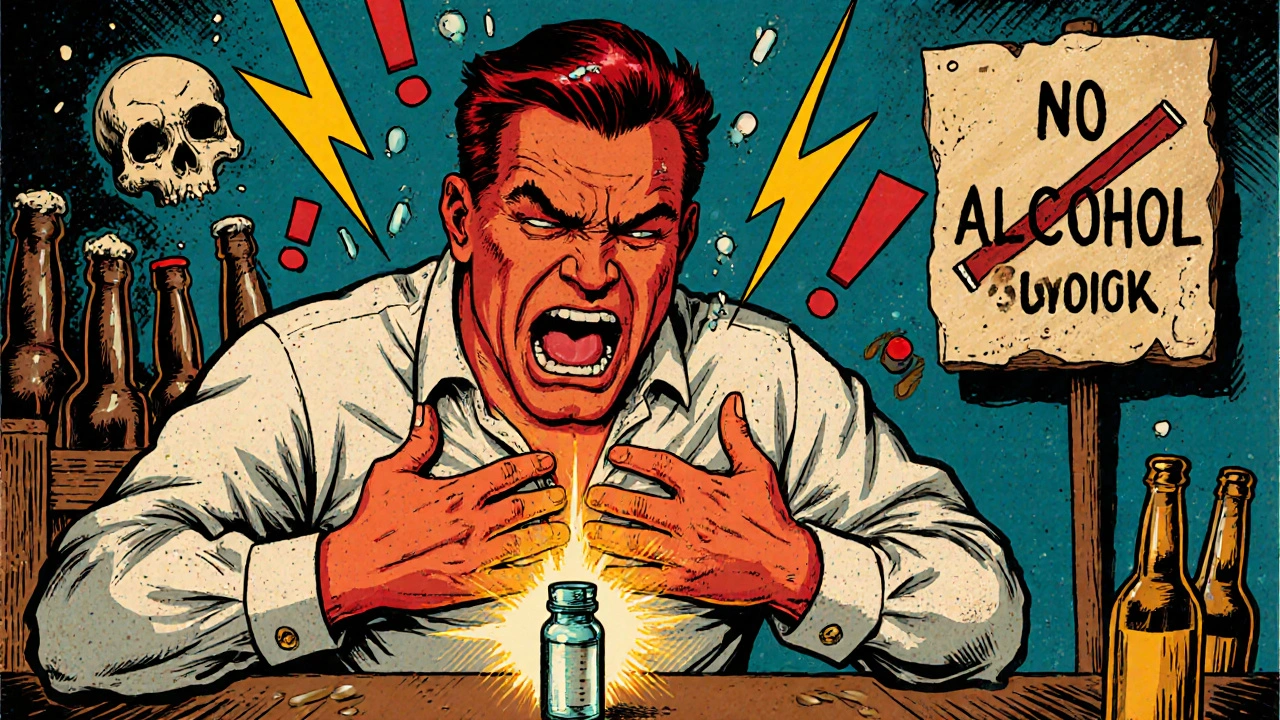
Antabuse is the brand name for disulfiram, a drug approved by the FDA in 1949. It works by blocking an enzyme called aldehyde dehydrogenase. When you drink alcohol while taking Antabuse, your body can’t break down acetaldehyde-the toxic byproduct of alcohol metabolism. That leads to a buildup of acetaldehyde in your blood, triggering a harsh reaction within minutes.
This isn’t a mild discomfort. It’s a full-body shock. Within 5 to 15 minutes of drinking, you might experience:
- Severe flushing of the face and neck
- Throbbing headache
- Nausea and vomiting
- Chest pain and rapid heartbeat
- Difficulty breathing
- Dizziness or fainting
These symptoms can last for hours. In rare cases, especially with large amounts of alcohol, they can be life-threatening. That’s the point. The fear of this reaction becomes a powerful deterrent.
Who Is Antabuse For?
Antabuse isn’t for everyone. It’s designed for people who are serious about stopping drinking and are willing to take responsibility for their recovery. It works best when:
- You’ve already tried quitting without medication and failed
- You’re in a stable living situation with support
- You’re not currently using other substances like opioids or benzodiazepines
- You’re willing to take the pill every day-even on days you don’t plan to drink
It’s not a first-line treatment. Most doctors won’t prescribe it unless you’ve been through counseling or a support group like Alcoholics Anonymous. It’s not a substitute for therapy-it’s a tool to buy you time while you rebuild your life.
How to Take Antabuse
Antabuse comes as a tablet, usually taken once a day. The typical starting dose is 250 mg, though some people take 500 mg depending on their doctor’s advice. It’s usually taken in the morning to avoid sleep disruption.
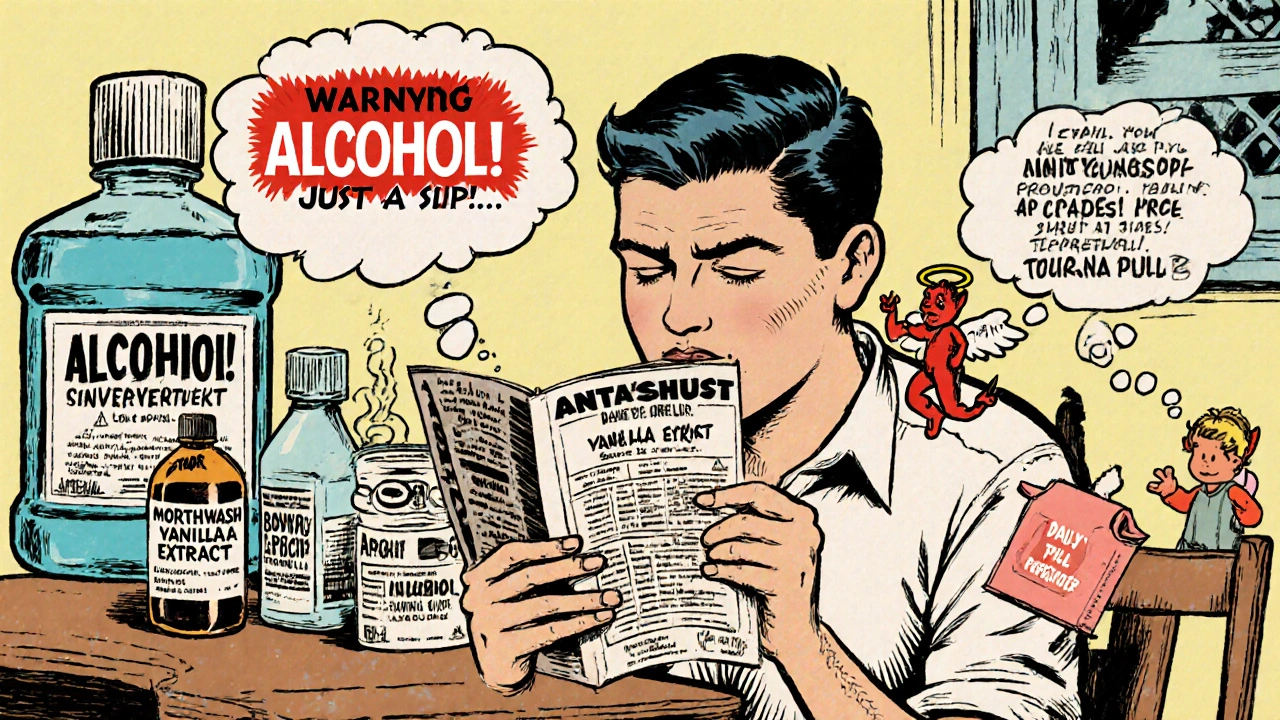
You won’t feel any effects from the drug itself. No high. No drowsiness. No mood changes. You only feel something if you drink alcohol-even a sip of beer, a taste of wine in cooking, or a mouthwash with alcohol. That’s why it’s critical to read every label on everything you use.
It takes about 10 to 14 days for Antabuse to fully leave your system after you stop taking it. So even if you decide to quit the medication, you still need to avoid alcohol for two weeks.
What You Can’t Drink (or Use) While on Antabuse
It’s not just beer, wine, and liquor. Hidden sources of alcohol are the biggest trap for people on Antabuse. Here’s what you need to avoid:
- Alcohol-based mouthwashes (like Listerine)
- Some cough syrups and cold medicines
- Vanilla extract and other alcohol-based flavorings
- Fermented foods like soy sauce, kombucha, or ripe fruit
- Perfumes, colognes, or hand sanitizers if you accidentally ingest them
- Alcohol wipes used on skin before injections
One patient I know took a sip of a mocktail that had been made with vanilla extract. Within ten minutes, he was on the floor, vomiting and sweating. He didn’t realize vanilla extract was 35% alcohol. That’s the kind of mistake Antabuse forces you to learn the hard way.
Side Effects and Risks
Even without drinking, Antabuse can cause side effects. The most common ones include:
- Headaches
- Drowsiness or fatigue
- Metals taste in the mouth
- Acne or skin rashes
- Impotence or reduced libido
More serious risks include liver damage, especially if you already have liver disease from long-term drinking. That’s why doctors require blood tests before and during treatment. You also shouldn’t take Antabuse if you have:
- Severe heart disease
- Psychosis or untreated depression
- Recent use of metronidazole or certain antifungals
People with a history of suicide attempts are often discouraged from using Antabuse. The drug doesn’t cause depression, but the shame and frustration of relapsing while on it can make things worse.
Why Antabuse Works for Some and Not Others
Studies show that about 50% of people who take Antabuse stay sober for at least six months-if they take it consistently. But if you miss doses, the effect disappears. The drug only works if you take it every day.
That’s why many people use it under supervision. In some clinics, nurses or family members watch you swallow the pill. This is called directly observed therapy. It’s not glamorous, but for someone with severe alcohol dependence, it’s the difference between relapse and recovery.
Others use it as a psychological anchor. They keep the pill bottle on their nightstand, next to their phone. Seeing it every morning reminds them why they’re trying. For them, Antabuse isn’t just medicine-it’s a symbol of commitment.
Alternatives to Antabuse
If Antabuse doesn’t feel right for you, there are other options:
- Naltrexone (Vivitrol or Revia): Blocks the pleasurable effects of alcohol, reducing cravings. Taken daily or as a monthly shot.
- Acamprosate (Campral): Helps stabilize brain chemistry after quitting. Reduces anxiety and insomnia during early recovery.
- Topiramate: Originally an epilepsy drug, it’s shown promise in reducing heavy drinking.
Each has different side effects and mechanisms. Naltrexone is often preferred for people who still want to drink occasionally but need to cut back. Antabuse is for those who need to stop completely-and need a physical barrier to keep themselves from drinking.
What Happens If You Relapse?
Relapse doesn’t mean failure. It means you’re human. If you drink while on Antabuse, you’ll get sick. That’s not punishment-it’s feedback. The key is what you do next.
Don’t stop the medication. Don’t feel ashamed. Talk to your doctor. Adjust your support system. Maybe you need more counseling. Maybe you need to remove triggers from your home. Maybe you need to stop hanging out with people who drink.
Antabuse gives you a second chance. Not a perfect one. Not an easy one. But a real one.
Getting Started with Antabuse
If you think Antabuse might help you:
- See your doctor or an addiction specialist. Bring a list of your drinking habits and past attempts to quit.
- Get blood tests to check liver function and heart health.
- Discuss your support system. Will someone help you take the pill every day?
- Remove all alcohol and alcohol-containing products from your home.
- Start therapy or join a support group. Antabuse works better with counseling.
It’s not a quick fix. But for many, it’s the first time they’ve felt in control of their drinking.
Can you drink alcohol while taking Antabuse?
No. Drinking alcohol while on Antabuse causes a dangerous reaction including severe flushing, vomiting, chest pain, and difficulty breathing. Even small amounts-like a sip of wine or alcohol-based mouthwash-can trigger symptoms. The reaction can last for hours and may require emergency care.
How long does Antabuse stay in your system?
Antabuse remains active in your body for up to two weeks after your last dose. You must avoid all alcohol during this time. The effects wear off slowly, so even if you stop taking it, you’re not safe from reactions until at least 14 days have passed.
Is Antabuse addictive?
No. Antabuse does not cause physical dependence or a high. You won’t crave it or need to increase your dose over time. It’s not a controlled substance. The only risk is forgetting to take it-or stopping because you think you’re "cured."
Does Antabuse help with cravings?
No. Antabuse doesn’t reduce cravings. It works by making drinking physically unpleasant. If you still want to drink, you’ll need other tools-like counseling, support groups, or medications like naltrexone-to manage urges.
Can you take Antabuse if you have liver disease?
Usually not. Antabuse is processed by the liver, and it can worsen existing liver damage. Doctors will check your liver enzymes before prescribing it and monitor them regularly. If you have cirrhosis or severe hepatitis, you’ll likely be advised against using it.
Gareth Harington
I am a pharmaceuticals expert who enjoys delving into the intricacies of medication and supplements. My work often involves researching new drug developments and how they impact treatment strategies for various diseases. I find great satisfaction in educating others on these topics, whether through written articles or engaging discussions. Writing allows me to share insights into healthcare advancements and their real-world applications. Passionate about fostering informed communities, I continuously seek to explore emerging trends in the pharmaceutical world.


10 Comments
Evan Brady
Antabuse isn't magic, but it's the closest thing to a bouncer for your liver. I've seen folks go from drinking a six-pack a night to clean for 18 months just because the thought of throwing up for hours made them pause. The real win? It doesn't care if you're rich, broke, or broken-it just makes alcohol toxic. No hype, no high, just consequences. That's power.
Jenny Lee
I tried it for 3 weeks. Didn't drink. Didn't need to. Just seeing the bottle on my nightstand was enough.
Jeff Hakojarvi
Just wanna say-this post is spot on. I’ve been on Antabuse for 11 months. The fatigue and metallic taste? Yeah, annoying. But I’ve held onto my job, repaired my relationship with my kid, and actually slept through the night for the first time in 7 years. It’s not glamorous. But recovery rarely is. Don’t let the side effects scare you off-talk to your doc. And yeah, read every label. I once almost took a sip of vanilla almond milk that had ‘natural flavor’-turned out it had ethanol. Lesson learned the hard way.
Richard Couron
They don't want you to know this but Antabuse is part of the pharmaceutical deep state's plan to control the masses. They know if people can just drink safely, the alcohol industry collapses and then the whole system falls. That's why they push 'therapy' and 'AA'-to keep you dependent on their systems. I stopped taking it after I found out my doctor got kickbacks from the makers. Now I drink apple cider vinegar and pray. It's working better.
Premanka Goswami
They say it blocks aldehyde dehydrogenase... but what if the real enemy is the government’s hidden fluoride in the water? Fluoride weakens your liver’s ability to detox-so Antabuse just makes it worse. I’m not saying it doesn’t work, I’m saying the system rigged it. And why do they make you avoid kombucha? That’s ancient wisdom! They’re scared of fermented foods because they heal. They want you weak.
Alexis Paredes Gallego
So you're telling me the solution to alcoholism is making people terrified of their own biology? Brilliant. Just brilliant. We’re not treating addiction-we’re weaponizing physiology. Next they’ll give us pills that make sex painful if you cheat. Oh wait, that’s already happening in some cults. This is just capitalism’s version of a moral panic dressed in white lab coats. I’m not taking it. I’m taking a vacation to a beach where no one has heard of disulfiram.
Hannah Blower
Antabuse is the ultimate existential deterrent. It doesn't cure the desire-it forces you to confront the absurdity of your own self-destruction. The vomiting, the flushing, the terror-it’s not medicine, it’s phenomenology. You don’t stop drinking because you’re weak. You stop because the universe, via biochemistry, refuses to let you lie to yourself anymore. That’s the real treatment: radical honesty delivered via gastrointestinal revolt.
Ram tech
why take this pill when u can just stop drinking? so much drama. i dont get it. people make things hard.
Kevin Jones
Antabuse is a metaphysical firewall. It doesn’t alter the self-it enforces ontological boundaries. The body becomes the judge, the jury, and the executioner. You don’t choose sobriety-you are chosen by your own physiology. The pill is merely the catalyst for an ancient biological covenant: drink, die. Simple. Elegant. Unforgiving.
Saket Sharma
Antabuse is a Band-Aid on a bullet wound. Real recovery is therapy, community, purpose. This is just chemical coercion. If you need a poison to stop drinking, you’re not ready. You’re just scared. And fear doesn’t build character-it builds compliance. I’ve seen 3 people on this stuff relapse harder after 6 months. The shame eats them alive. Don’t mistake fear for freedom.
Write a comment