Nov
18
- by Gareth Harington
- 12 Comments
When someone is diagnosed with carcinoma, the journey doesn’t end with a treatment plan. The real challenge often begins afterward-managing fear, fatigue, isolation, and the quiet grief that comes with a life turned upside down. For many patients and their caregivers, the most powerful tool isn’t another medication or scan. It’s showing up to a room full of people who get it.
Why Support Groups Work When Medicine Can’t
Doctors give you stats: survival rates, side effect probabilities, treatment timelines. But they can’t tell you how it feels to cry in the shower because your hair is gone, or how hard it is to explain to your kids why you’re not the same person anymore. Support groups fill that gap. They don’t replace treatment-they make treatment bearable.
A 2023 study from the American Cancer Society tracked over 1,200 carcinoma patients in structured peer support programs. Those who attended regular meetings reported 40% lower levels of anxiety and 35% higher adherence to treatment plans compared to those who didn’t. The reason? Connection. When you hear someone say, “I felt the same way,” it stops the spiral of thinking you’re broken or alone.
What Happens in a Typical Support Group?
There’s no script. No forced positivity. No “just stay strong” platitudes. A good group starts with silence-sometimes minutes of it. People arrive tired, angry, numb. Then someone says, “I didn’t sleep last night because I kept thinking about the biopsy results.” And suddenly, others nod. Not because they have answers, but because they’ve been there.
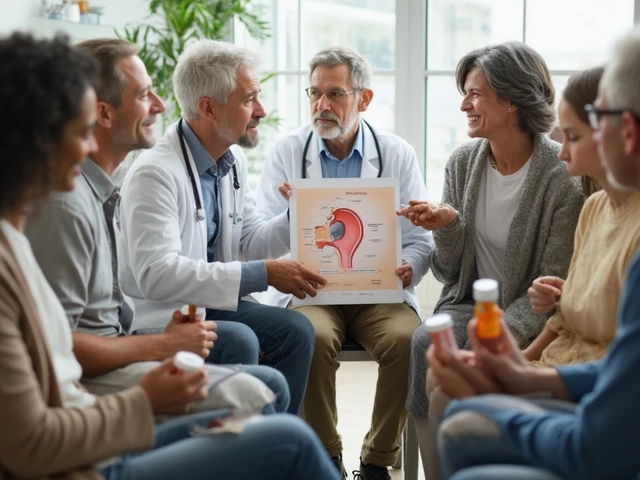
Some groups are led by trained counselors. Others run by patients who’ve been through it. Meetings might include:
- Sharing updates on treatment progress
- Discussing how to talk to family members who don’t understand
- Exchanging tips for managing nausea, pain, or fatigue
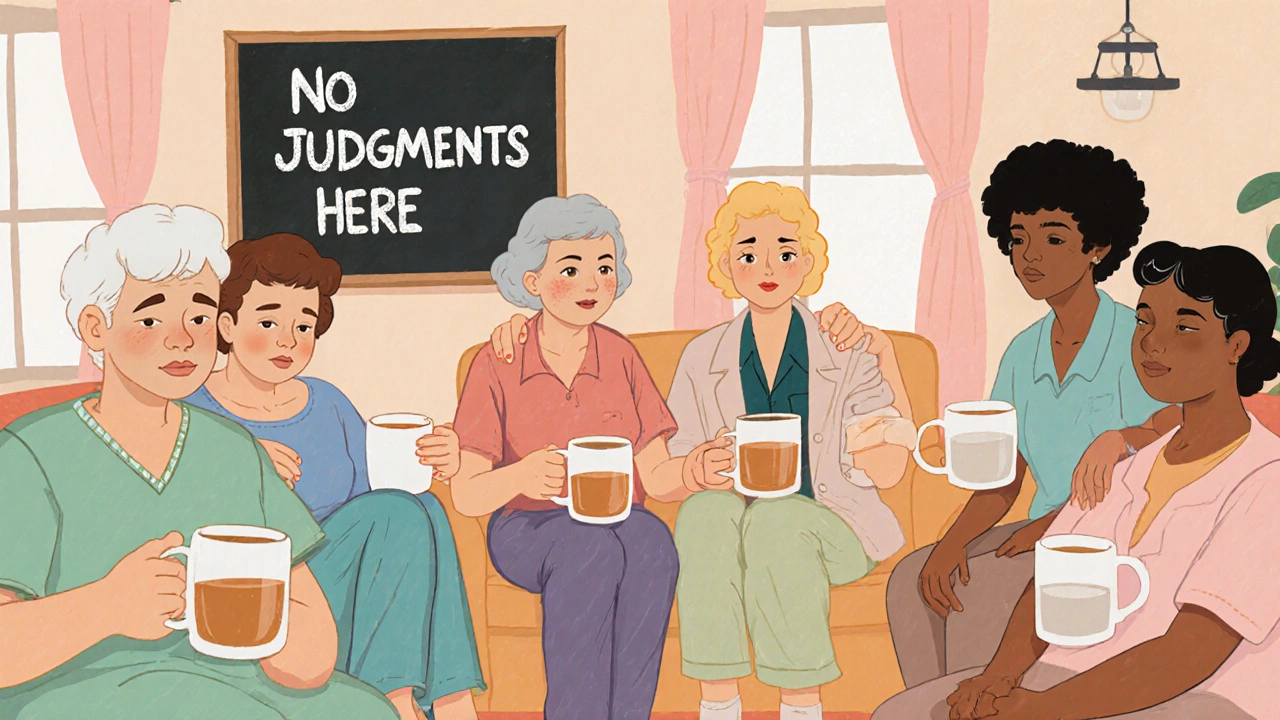
- Just sitting together, watching a movie, or drinking tea in silence
One woman in a lung carcinoma group started bringing her husband every week. He didn’t speak for the first three months. Then, one day, he said, “I thought I was supposed to fix things. But no one can fix this. I just needed to know I wasn’t the only one scared.”
For Caregivers: The Invisible Patients
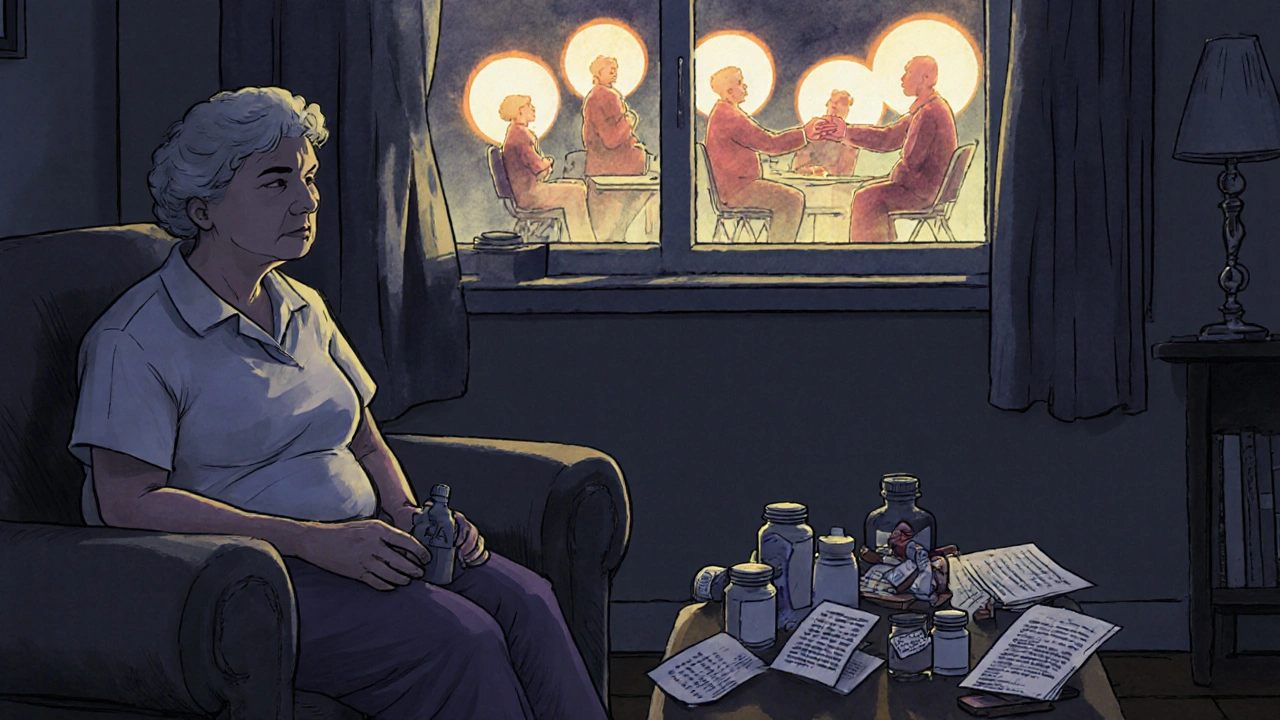
Caregivers are often overlooked. They’re the ones who drive to appointments, manage medications, handle insurance calls, and hold back tears when the patient is asleep. But who holds them?
Many caregivers don’t realize they’re eligible for their own support groups-separate from the patient’s. These spaces are designed for the people who give everything but rarely ask for anything. In caregiver-only groups, you hear things like:
- “I haven’t had a full night’s sleep in six months.”
- “I feel guilty for getting angry at my spouse for being tired.”
- “I don’t know who I am anymore.”
These aren’t complaints. They’re admissions of survival. And in those moments, someone else says, “Me too.” That’s the medicine no pharmacy can dispense.
How to Find the Right Group
Not all groups are the same. Some are large and hospital-based. Others are small, online, or faith-based. Here’s how to find one that fits:
- Ask your oncology nurse-they often have a list of local and virtual options.
- Check the carcinoma support networks run by the American Cancer Society or CancerCare.org.
- Look for groups that match your needs: in-person, video call, daytime, evening, or even text-based forums.
- Try three different groups before deciding. One might feel too clinical. Another too emotional. The right one will feel like a breath of air.
- Ask if the group allows caregivers to join patient sessions, or if they offer separate caregiver circles.
There’s no rule that says you have to stay. If a group makes you feel worse, leave. No guilt. The goal isn’t to attend every week-it’s to find a place where you feel less alone.
What If You’re Not Ready to Talk?
You don’t have to speak. You don’t even have to sit in the front. You can come in, sit in the back, sip your coffee, and listen. Many people say the first time they walked into a group, they planned to leave after five minutes. They stayed for two hours.
One man with prostate carcinoma came to his first meeting just to get out of the house. He didn’t say a word. The next week, he brought his daughter. The third week, he started sharing how he missed fishing with his grandkids. He didn’t cry until the third month. But he kept coming.
Healing doesn’t always look like talking. Sometimes, it looks like showing up.
The Ripple Effect: How Support Groups Help Beyond the Room
Support groups don’t just help the people inside them. They change how families communicate. They reduce ER visits. They help patients make smarter decisions about treatment because they’ve heard real stories from people who’ve walked the path.
One caregiver told her husband’s oncologist she’d learned from a group that certain supplements could interfere with his chemo. She hadn’t known that before. That conversation saved him from a dangerous interaction.
Groups also reduce burnout. When caregivers feel seen, they’re less likely to quit. And when patients feel supported, they’re more likely to stick with treatment-even when it’s hard.
Online vs. In-Person: Which Is Better?
Online groups are easier to join. You don’t need to drive, find parking, or dress up. You can attend from your couch, in pajamas, after a long day. They’re great for people in rural areas or those with mobility issues.
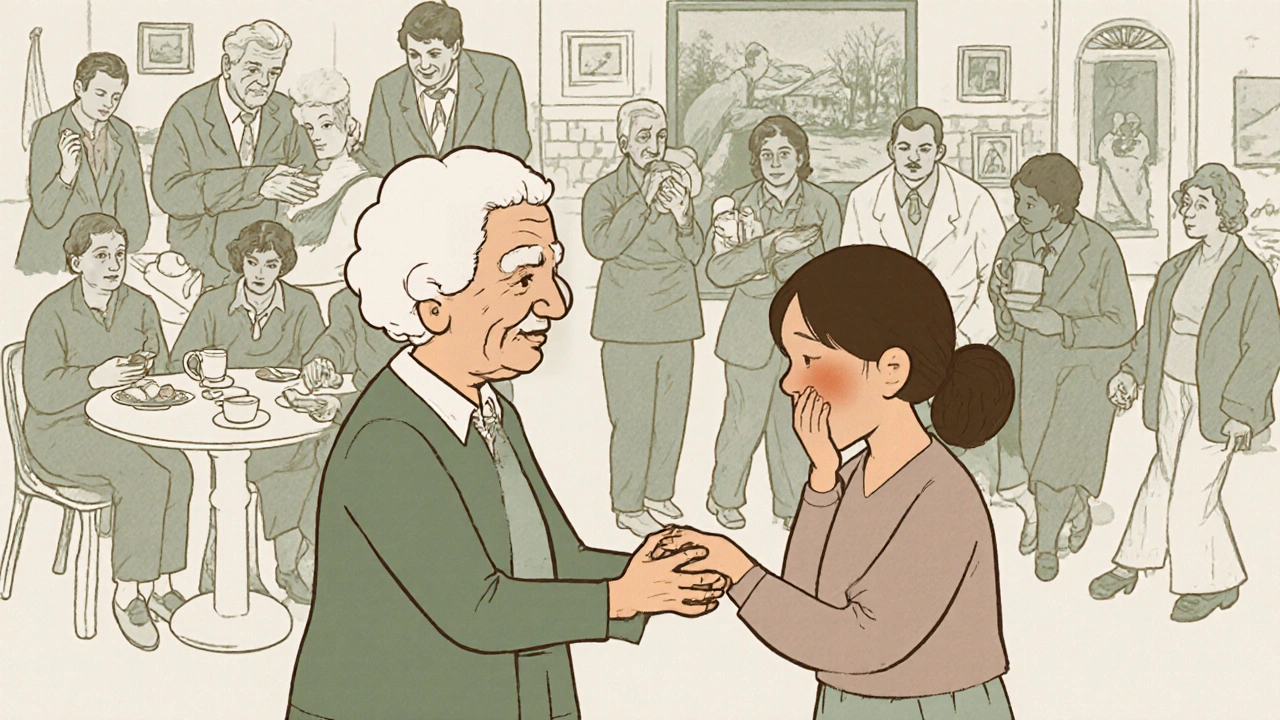
In-person groups offer something harder to replicate: touch. A hand on the shoulder. A shared hug. The quiet comfort of sitting next to someone who understands without saying a word.
Many people start online and later move to in-person. Others do both. There’s no right way. Only the way that helps you breathe.
Real Stories, Real Change
Carol, 68, was diagnosed with breast carcinoma. Her daughter lived across the country. Carol joined a group for older women. She met Marge, who had gone through the same surgery three years earlier. Marge taught Carol how to manage lymphedema with simple stretches. She also showed her how to say “no” to well-meaning friends who kept asking, “How are you?” without really wanting to hear the answer.
After six months, Carol started leading a small group. She didn’t feel ready. But she showed up anyway. Now, she says, “I didn’t know I could be a light for someone else until I stopped trying to be strong all the time.”
That’s the quiet magic of these groups. They don’t cure cancer. But they help people live with it-without losing themselves.
Are support groups only for patients with late-stage carcinoma?
No. Support groups welcome people at every stage-newly diagnosed, in treatment, in remission, or managing long-term side effects. Even those who’ve finished treatment often return because the emotional impact doesn’t disappear when the scans come back clear. Grief, fear of recurrence, and identity loss don’t follow a timeline.
Can children join caregiver support groups?
Most caregiver groups are for adults, but many organizations offer separate youth programs for teens and siblings of patients. These are designed to help young people process their feelings in age-appropriate ways. Ask your local cancer center if they offer family support services.
Do support groups cost money?
Most are free. Organizations like CancerCare, the American Cancer Society, and local hospitals fund them through donations and grants. Some may ask for voluntary contributions, but no one is turned away for lack of funds. Always ask before assuming there’s a fee.
What if I don’t like the people in the group?
It’s normal to feel that way at first. Not every group is a fit. Some people talk too much. Others are too quiet. Some focus too much on negative stories. Try a different group. There are hundreds of options nationwide. The goal isn’t to find the perfect group-it’s to find one where you feel safe enough to be real.
Can I start my own support group?
Yes. Many groups start with just one person who felt alone. Local hospitals, community centers, and nonprofits often provide training, meeting space, and materials for free. You don’t need to be a therapist. You just need to show up, listen, and let others do the same.
Next Steps: How to Start Today
If you’re a patient or caregiver reading this and thinking, “I should try this,” here’s what to do right now:
- Call your oncology clinic and ask for their list of support groups.
- Visit CancerCare.org or AmericanCancerSociety.org and search for “carcinoma support groups near me.”
- Set a reminder to attend one meeting this week-even if it’s virtual.
- Bring a notebook. Write down one thing someone said that stuck with you.
- Don’t wait until you’re “ready.” You’ll never feel ready. But you’ll feel less alone after the first time you say, “Me too.”
You don’t have to fight this alone. There are people out there who know exactly what you’re going through. And they’re waiting to hear your story, too.
Gareth Harington
I am a pharmaceuticals expert who enjoys delving into the intricacies of medication and supplements. My work often involves researching new drug developments and how they impact treatment strategies for various diseases. I find great satisfaction in educating others on these topics, whether through written articles or engaging discussions. Writing allows me to share insights into healthcare advancements and their real-world applications. Passionate about fostering informed communities, I continuously seek to explore emerging trends in the pharmaceutical world.

12 Comments
Tara Stelluti
ive been going to these groups for 2 years now and honestly? the first time i walked in i thought i was gonna puke. sat in the back with my hoodie up. didnt say a word. but then this lady next to me just handed me a tissue and nodded. no words. just... knew. i stayed for 3 hours. i still go. not because i need advice. because i need to remember i’m not a ghost.
Danielle Mazur
These support groups are just another tool of the medical-industrial complex to pacify patients while they overcharge for chemo. Did you know the American Cancer Society receives funding from pharmaceutical giants? Coincidence? I think not.
Will Phillips
Look i dont care what your feelin or how you feel about it but if you cant handle cancer without a group of strangers whispering in a circle then maybe you shouldve thought about that before you ate that hot dog every day for 20 years. This is America not a therapy session. Get tough. Stop whining. You think your the only one with problems?
darnell hunter
While the anecdotal evidence presented in this article is emotionally compelling, it lacks rigorous statistical validation. The cited 40% reduction in anxiety lacks a control group, and the methodology of the 2023 ACS study is not peer-reviewed or published in a reputable journal. Furthermore, the term 'carcinoma' is used imprecisely across multiple histological subtypes, undermining the clinical validity of the entire argument.
Hannah Machiorlete
you know what’s worse than cancer? pretending you’re not broken. i went to one group and this woman cried for 45 minutes straight. i just sat there and thought ‘why am i here? this is just emotional hoarding.’ i left. never went back. if you’re gonna be sad, be sad alone. don’t make me watch it.
Bette Rivas
It is important to note that structured peer support programs, particularly those with trained facilitators and standardized intake protocols, demonstrate statistically significant improvements in psychological resilience and treatment adherence, as corroborated by multiple longitudinal studies including those published in the Journal of Clinical Oncology and Psycho-Oncology. The mechanisms of benefit include normalization of emotional responses, reduction of isolation-induced cortisol elevation, and the reinforcement of coping schemas through vicarious learning. Furthermore, caregiver-specific groups have been shown to reduce burnout by up to 52% when attendance exceeds four sessions monthly, per a 2022 meta-analysis. Accessibility remains a critical factor: virtual platforms must be HIPAA-compliant, and in-person groups should accommodate mobility and sensory impairments to ensure equitable participation.
Mary Follero
my mom started going after her surgery and she came home with a new laugh. not the fake one. the real one. the one she lost after the diagnosis. she started bringing her knitting. one week she brought a blanket she made for someone else. i cried. not because she was sick. because she remembered how to give. you don’t need to talk to find your voice. sometimes you just need to show up. and let someone else carry you for a little while.
Arun Mohan
Western medicine is so obsessed with emotional labor as a cure. In India, we don’t sit in circles and cry. We pray. We work. We feed the family. We don’t make illness a performance for strangers. This is not healing. This is therapy capitalism. You don’t need a group. You need discipline.
Jessica Engelhardt
Support groups are just trauma tourism. People go to feel superior about their suffering. ‘Oh I had stage 3 and I’m still alive!’ Yeah? So did 70% of people in this study. Also, why are all these groups white? Where’s the diversity? This article is tone deaf. Also, my cousin’s oncologist told her to avoid sugar. But the group said it’s a myth. Who do you believe? The doctor or the strangers?
Lauren Hale
One thing no one talks about: the silence after the group ends. You walk out. The world is still loud. People ask ‘how are you?’ and you just smile. But inside? You carry that room with you. The person who said ‘I didn’t sleep last night’? You carry her. The man who cried in month three? You carry him. You don’t need to say anything. You just know: you’re not the only one holding it together with duct tape.
Greg Knight
Let me tell you something. I started going to a group because my wife was falling apart. I didn’t speak for six weeks. Then one day I said, ‘I’m scared I’ll forget what her voice sounds like if she’s gone.’ And this old guy next to me, he just put his hand on my knee and said, ‘I forgot my wife’s laugh for a year. Then one morning, I heard it in the wind. I cried for an hour.’ That’s it. That’s all you need. No advice. No fixes. Just someone who knows what silence sounds like when it’s heavy.
rachna jafri
These groups are a mirror. You see your pain reflected in strangers and suddenly it’s not yours alone anymore. It’s collective. It’s ancient. Like the first human who sat beside another in grief and didn’t speak. That’s the real medicine. Not pills. Not scans. Just presence. The universe doesn’t heal you. People do. Quietly. Without fanfare. Without hashtags. Just… being there. And that? That’s rebellion.
Write a comment